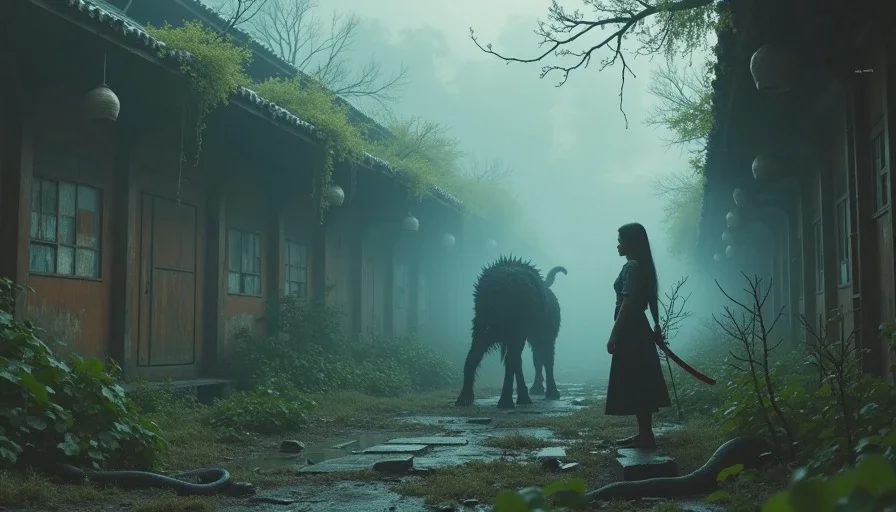
Game Freak spent decades making one of the most commercially successful series in existence. Then they made a serious, melancholic action RPG about a girl, a dog, and the end of the world. That alone deserves attention.
Beast of Reincarnation released on August 4, 2026 for PlayStation 5, Xbox Series X/S, and PC, with day-one Game Pass access. It is their first title on those platforms and the clearest attempt yet to prove the studio can build something that is not Pokémon. The reception has been mixed. Steam scores hovered in the low-to-mid 60s percent positive in the first stretch. Critics split between cautious praise for the combat and atmosphere and frustration that the game feels assembled from familiar parts without enough of its own voice. Game Freak even issued a statement acknowledging that the experience did not land as enjoyably as they hoped for many players.
I have thoughts.
The setup and the ambition
The year is 4026. Japan has been reshaped by a parasitic blight that fused flora and fauna into aggressive, twisted forms. Many remaining humans transferred their consciousness into robotic golems to survive. Emma, an eighteen-year-old outcast marked by the same corruption, is a Sealer—someone who can manipulate plant matter for traversal and combat. Her only constant companion is Koo, a blighted dog who fights beside her.
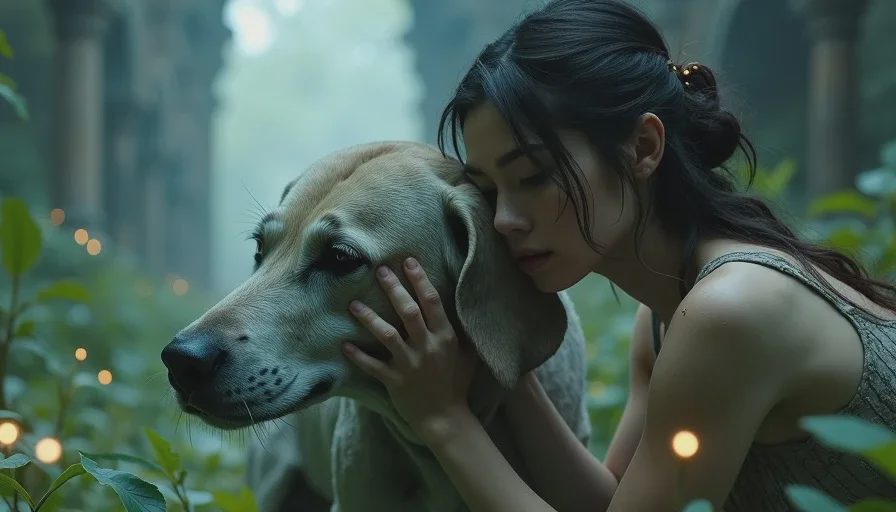
Their task is to hunt the Nushi, massive regional bosses that rule the blighted zones, absorb their power, and eventually confront the Beast of Reincarnation itself, a cyclical force of destruction that returns roughly every century. The world is presented as beautiful and harsh at the same time: ruined cities half-swallowed by glowing vegetation, misty forests that feel alive and hostile, set-piece bosses that mix animal and plant in ways that occasionally recall Shadow of the Colossus or the more theatrical Monster Hunter encounters.
Director Kota Furushima has talked about wanting the game to explore loneliness without collapsing into pure sadness. The dog is the deliberate counterweight—warmth and reliability in a world that has mostly given up. That intention shows. Koo is not a disposable AI companion. The combat system is built around the pair functioning as a unit.
Combat that almost finds its own rhythm
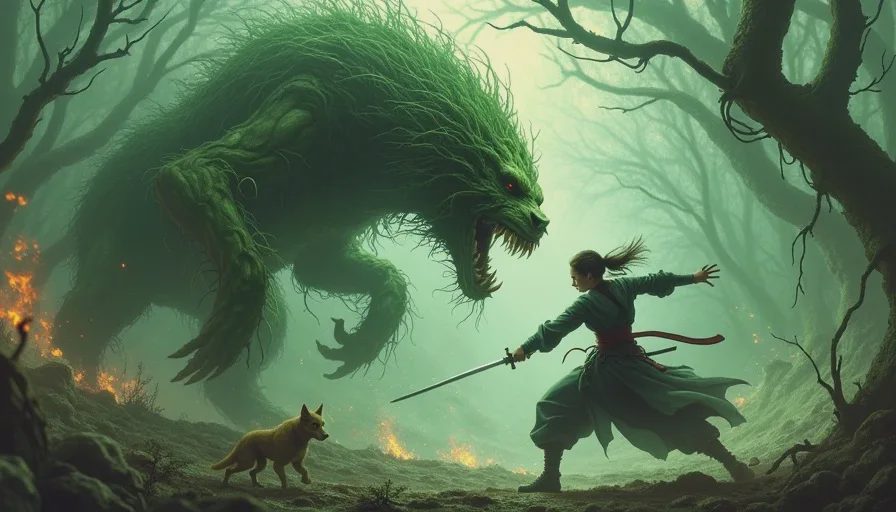
Emma handles the real-time side: katana combos, parries, dodges, and finishers. Successful parries feed a resource that lets you issue commands to Koo. Those commands slow time briefly and play out more like tactical RPG skills—positioning, elemental effects, big disruption tools. The hybrid feels intentional. It is not pure Sekiro, not pure real-time action, not pure command-based RPG. It sits in the middle and tries to make both halves matter.
When it clicks, the fights have a nice push-and-pull. You read an enemy, land the parry window, open a moment for Koo to punish, then resume the pressure. The larger Nushi fights give the system room to breathe. Some of the environmental traversal—using Emma’s plant abilities to climb, swing, or create temporary platforms—adds a layer of verticality that keeps the zones from feeling completely flat.
The problems appear when the systems stop surprising you. Many regular enemies lean on a small number of attack patterns, so the parry rhythm becomes predictable. The zones, while visually distinct at first, start to recycle structure: clear the path, deal with patrols, find the campsite rest points, prepare for the next big creature. The story has moments of intrigue and a few solid twists, but the emotional through-line leans heavily on the dog and on Emma’s quiet determination rather than on deeper character work or a particularly sharp script.
You can feel the influences clearly—Sekiro’s deflection focus, NieR’s melancholic post-human atmosphere, the boss-as-landmark design of certain open-zone action games. Influence is fine. The issue is that the game rarely transforms those influences into something that feels necessary. It is competent, often pretty, occasionally stirring, and too frequently content to rest on the fact that a major Pokémon studio made something darker and more mechanical.
Why the mixed reception feels honest
Studios that live inside one massive franchise for decades carry a specific kind of pressure when they step outside it. Expectations run in two directions at once: prove you can do more, and do not embarrass the brand that pays the bills. Beast of Reincarnation is clearly a sincere attempt. The art direction has personality. The dog companion is handled with care. The hybrid combat shows someone on the team was genuinely interested in systems rather than just spectacle.
But sincerity does not automatically produce distinction. The game’s best ideas—the loneliness theme, the one-person-one-dog framing, the blight as both environmental and personal corruption—are present but not always fully developed. Combat starts strong and then settles into a reliable loop that stops evolving as much as it should. Exploration has secrets and vertical moments, yet the overall structure of the zones begins to feel familiar after the first handful. Performance has been uneven on some platforms at launch, which does not help the first impression.
I keep coming back to Koo. In a game that is otherwise careful and sometimes remote, the dog is the element that feels most alive. The way the combat and the narrative both treat the companion as essential rather than optional is the clearest sign that Game Freak understood what made their own long-running series work on an emotional level. Connection matters. Reliability matters. Having someone (or something) that stays with you when the world has decided you are expendable matters.
That part landed for me. The rest of the game is a solid, sometimes beautiful action RPG that knows the right references and executes them cleanly enough without often transcending them.
Where this leaves Game Freak
I am glad they made it. A studio that only ever ships the thing the market already wants eventually loses the ability to surprise anyone, including itself. Beast of Reincarnation is imperfect and occasionally frustrating, but it is also proof of motion. The Gear Project that produced this title exists specifically to let the company try new shapes. This is one of those shapes.
Whether it becomes a foundation for stronger original work or a cautionary example of how hard it is to escape your own gravity remains to be seen. For now it sits in an interesting middle place: ambitious enough to respect, familiar enough to disappoint people who wanted a clearer break from the patterns of modern action RPGs, and anchored by a dog that is better written than most human side characters in the genre.
I played it. I finished it. I will remember the quiet moments with Koo more than most of the boss arenas. That is not nothing. It is also not quite enough to make the whole journey feel essential.
Game Freak swung. The bat connected. The ball did not leave the park. I am still interested in whatever they try next.
— Alex





No notes yet — write the first.