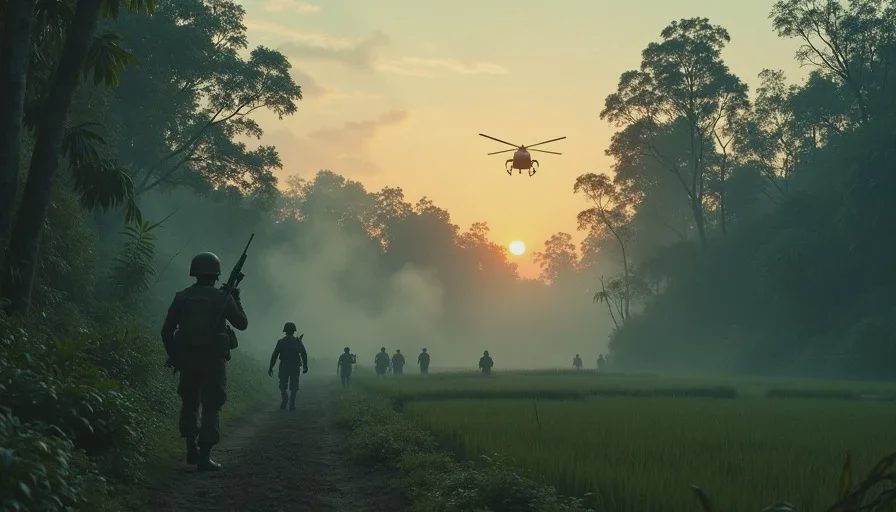
Hell Let Loose always felt like the anti-arcade shooter. Slow movement. Lethal bullets. Squads that actually need to talk. A commander staring at a map like it’s an RTS. When Expression Games and Team17 announced a full Vietnam standalone, I was curious and slightly worried. The original formula worked because the European theaters gave you long sightlines, open fields, and readable space. Vietnam is the opposite: triple-canopy jungle, mud, rivers, and visibility that collapses the moment you step off a trail.
The game launched on August 13, 2026 after a delay for polish. It is 50 versus 50. Six maps at launch, drawn from real operations and locations. US forces on one side, North Vietnamese Army on the other. The question is simple: does the shift in theater make the core loop better, worse, or just different?
The asymmetry is the point
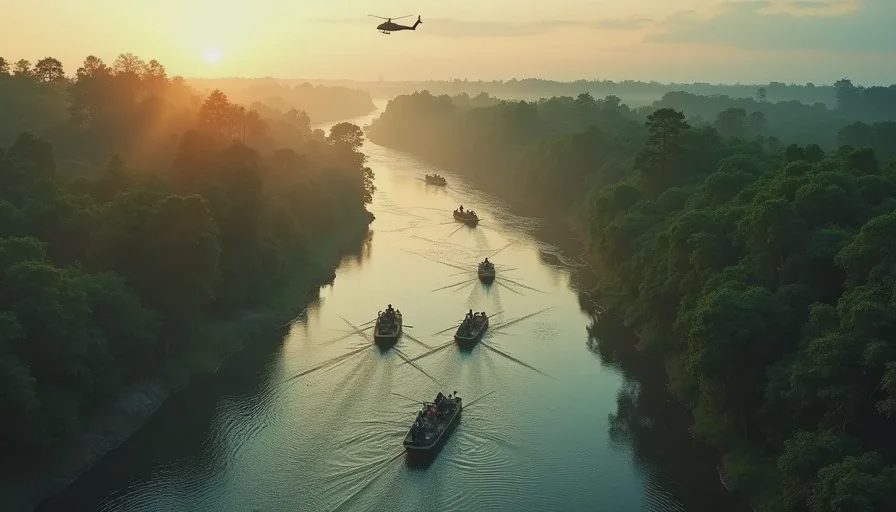
The two factions are not palette swaps. US forces bring helicopters for rapid insertion and extraction, patrol boats for the river networks, heavier direct firepower, and the ability to call in serious ordnance. The NVA lean on tunnels that let them appear behind lines, tighter infantry coordination, and a fighting style that rewards patience and local knowledge of the terrain. Playing one side after the other forces you to change how you think about every objective.
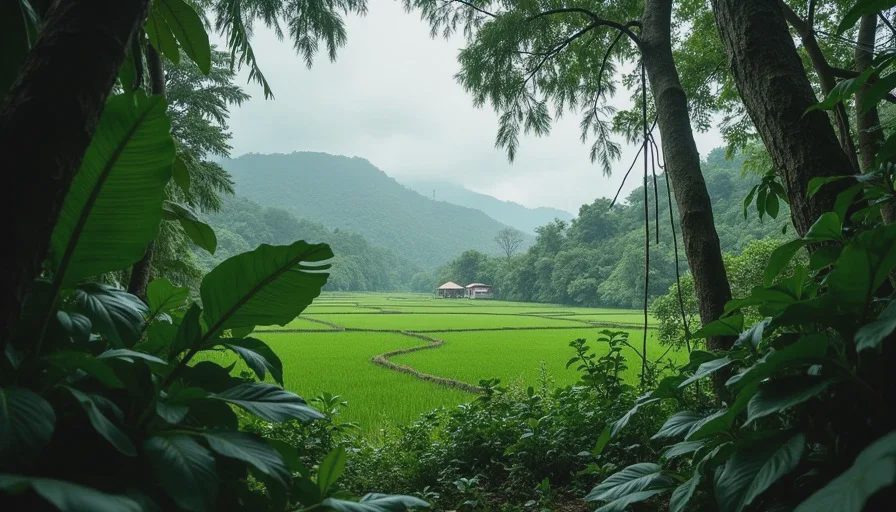
That asymmetry is the smartest thing the game does. In the original Hell Let Loose both sides felt roughly equivalent in tools even if the vehicles differed. Here the tools push you into distinct doctrines. A US squad that tries to fight like NVA infantry usually gets chewed up. An NVA squad that tries to slug it out in the open against American air and armor usually disappears. The maps reinforce this. Thanh Hóa Bridge, the one inspired by the Dragon’s Jaw and Operation Rolling Thunder, is a wet, vertical nightmare of river crossings, high ground, and villages that become absolute meat grinders. Other maps pull from Starlite, Huế during Tet, Đắk Tô, and the coastal logistics areas. Dense vegetation is not decoration. It is the primary defensive structure.
Communication or death
If you drop in alone and treat this like a standard multiplayer shooter, you will have a miserable time. Single shots kill. Movement is deliberate. The jungle hides everything. Without a squad that talks, you are just a slow-moving target waiting for someone you never saw to end your life. The roles (roughly seventeen to nineteen depending on how you count the specialist slots) only matter when they are coordinated. A machine gunner covering a trail, a medic keeping people up, an engineer placing defenses, a recon pair marking targets, a commander feeding resources and calling assets—all of it collapses without voice.
I spent my first few sessions frustrated. Then I found a squad that stayed on comms and treated the game like a shared problem instead of a personal deathmatch. Suddenly the same map that felt unfair became tense and readable. You start hearing the difference between friendly and enemy movement. You start using the vegetation instead of fighting it. You start caring about the sector map the way the commander does. The tug-of-war Warfare mode, where both sides push and counter-push across linked objectives, produces the best moments: the slow realization that the other team has tunneled under your flank, the frantic defense of a rice-paddy village while helicopters try to extract the wounded, the quiet thirty seconds before an assault when everyone is checking ammo and waiting for the order.
Where the fun lives and where it dies
The fun is real when the team is functional. The jungle creates a different kind of tension from the European maps. Engagements are closer, shorter, and more sudden. Sound design carries more weight because you often hear the enemy before you see them. The helicopters and boats add vertical and river layers that the original game never had. When a well-timed insertion lands a squad behind the line and they actually coordinate instead of scattering, it feels like the kind of emergent moment these games promise and rarely deliver.
The friction is equally real. The learning curve is steep and unapologetic. New players who expect Battlefield-style freedom or Call of Duty pacing bounce hard. Performance has been uneven on some platforms. The player base is still sorting itself into the people who want serious coordination and the people who just want to run and gun in a Vietnam skin. When the latter outnumber the former on a server, the match quality drops fast. Steam reviews settled into mixed territory for exactly these reasons—plenty of people love the tactical depth, and plenty of others feel punished for not already knowing the language of the game.
I do not think every evening is the right evening for Hell Let Loose: Vietnam. It asks for focus, for a microphone, and for the willingness to die a lot while you learn the rhythm of each map. When those conditions are met, it delivers a flavor of large-scale combat that still feels rare: slow, consequential, and dependent on people rather than individual aim. The jungle does not make the original formula obsolete. It just demands that you play it differently.
Is it fun? Yes—with the right squad and the right mindset. Without them it is a very expensive way to practice patience in the mud. I have had both kinds of nights. The good ones are the ones that stick.
— Alex





No notes yet — write the first.