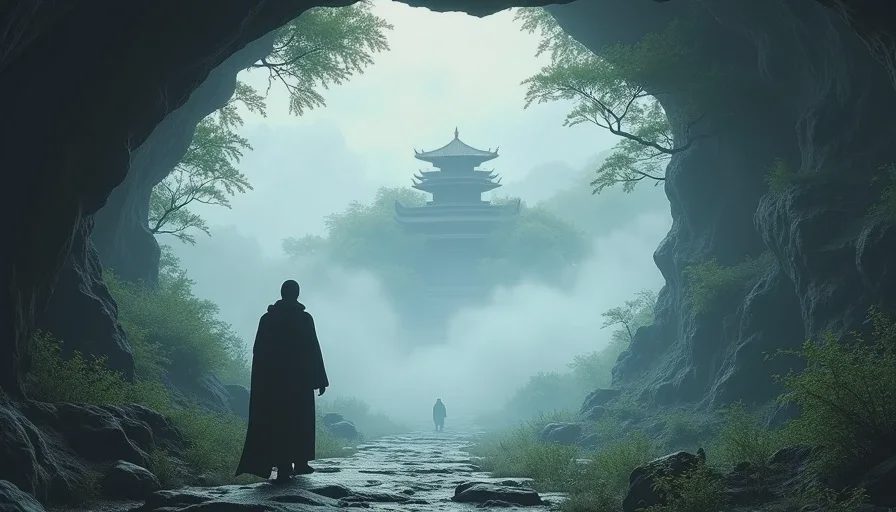
The first playthrough of Black Myth: Wukong is loud in the best way. You are learning the staff stances, surviving the big set-piece bosses, chasing the next transformation, and trying to keep up with a world that keeps expanding in scale and strangeness. The combat is the hook. The spectacle does most of the talking.
The second playthrough is different. The systems are already in your hands. You are no longer fighting for basic competence. That is when the quieter design starts to surface — the environmental storytelling, the character echoes, the way the game uses space and silence, and the slow realization of what the Destined One actually is.
I went back months after the first clear. What follows are the things that only properly landed the second time.
The mountain paths are curated, not open
On the first run you move forward because the path is there. On the second you notice how deliberately the camera and the terrain frame each reveal. Classical Chinese garden design has a principle often translated as “changing view with every step.” Black Myth applies it constantly. A temple roof appears through foliage long before you can reach it. A turn around a rockface suddenly opens a valley that was completely hidden. Moon gates and broken walls act as natural viewfinders.
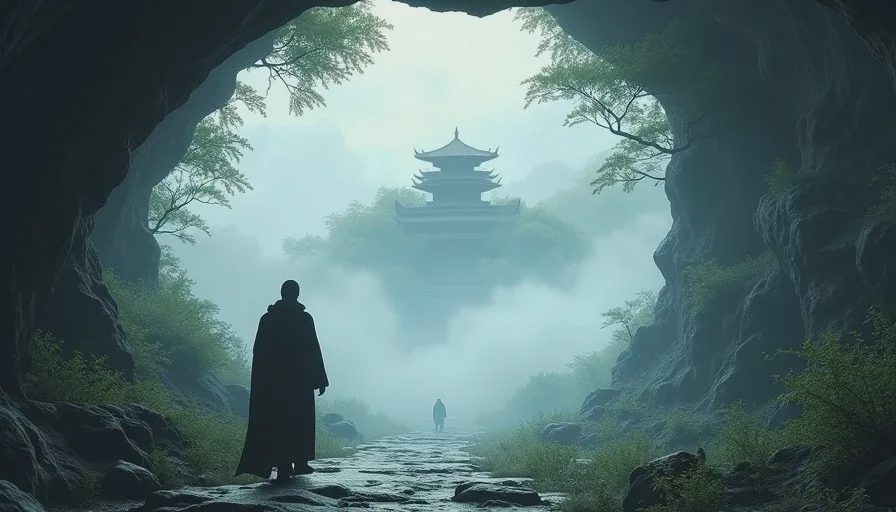
This is not just pretty composition. It controls information. You are rarely allowed a complete overview. The world is shown to you in pieces, the same way the story of the Journey and its aftermath is shown in pieces. Once you are no longer rushing to the next Keeper’s Shrine, the framing becomes obvious. The game is teaching you to look, not just to progress.
The secret areas are not side content — they are the second half of the sentence
Most players miss at least some of the secret regions on the first pass: the Ancient Guanyin Temple, the Kingdom of Sahālī, Purple Cloud Mountain, Bishui Cave, and the path that eventually leads to Erlang. These are not optional challenge rooms. They are required for the true ending, and more importantly they reframe the chapters they belong to.
The first playthrough treats the main path as the story. The second playthrough makes it clear that the main path is only half the story. The secret areas contain the missing emotional and thematic weight — the cost of the Celestial Court’s order, the personal histories of the yaoguai kings, and the evidence that the cycle the Destined One is walking has happened before. Without them the ending feels like a conclusion. With them it feels like a continuation of something much older and colder.
Characters who seemed simple become specific
Zhu Bajie’s relationship with the Violet Spider is easy to miss or dismiss as color on the first run. On the second it reads differently. The game gives them history that the novel only gestured toward. The final cutscene of that chapter stops being a mythological reference and starts feeling like a private tragedy that the larger plot simply collides with.
The same is true of smaller figures. Non-Void in Chapter 3 looks like another hypocritical monk the first time. The second time, after you have seen the fox dream and the portraits, his panic and violence become the logical endpoint of a specific moral failure rather than generic villainy. The game is full of these delayed character payoffs. They only register once you are no longer treating every NPC as either quest-giver or obstacle.
The Destined One is not collecting power. He is collecting a person
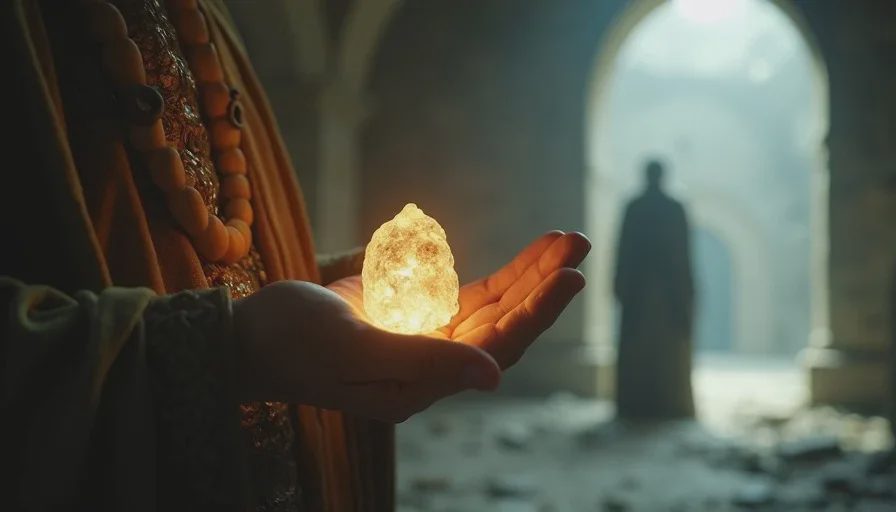
The six relics map onto the Buddhist six senses. That is stated clearly enough. What lands harder on a second playthrough is the final implication: the Destined One himself is the sixth relic — the mind. The previous five senses were taken and preserved. The mind could not be. It had to be walked back into existence through the journey.
This recontextualizes almost everything. The transformations, the spirits, the gradual recovery of Wukong’s abilities — none of it is simply “getting stronger.” It is the slow reassembly of a self that was deliberately broken. The true ending is not a reward for thoroughness. It is the moment the mind is complete enough to remember what was done to it.
I did not fully feel that the first time. I was too busy surviving the Stone Monkey. The second time, standing in the same arenas with the knowledge of what the relics actually are, the fights feel less like boss battles and more like stages in a reconstruction.
The silence between the noise
Black Myth is a loud game when it wants to be. The second playthrough is when you notice how carefully it uses the opposite. Long stretches of walking with only wind and distant wildlife. The way certain characters simply stop talking. The quiet after a major yaoguai falls, before the next piece of music or narration arrives. These pauses are not empty. They are the spaces where the weight of what you have already seen is allowed to settle.
On a first run those silences feel like transitions. On a second they feel like the game trusting you to sit with what has happened.
Why the second playthrough is the real one for me
I am not a completionist by nature. I do not need every spirit or every curio. What I needed from Black Myth: Wukong was time for the spectacle to recede so the design underneath could speak. The combat remains excellent. The boss fights are still the most visible achievement. But the thing that has stayed with me is the quieter architecture: the framed views, the delayed character histories, the realization that the protagonist is not becoming the Monkey King so much as becoming the only remaining piece that could still choose.
The first playthrough is the one you tell people about. The second is the one that changes how you remember it.
If you only ever play it once, you still get a very good action game with spectacular peaks. If you go back after the initial rush has cooled, you get something closer to what the studio was actually building — a story about a self being reassembled under the eyes of a system that preferred it broken.
That version hits harder. It is also the one I think about when the lights are off.
— Alex



No notes yet — write the first.