There is a particular kind of big-budget game that feels designed by committee: expensive, shiny, and strangely empty. God of War (2018) is not that game. It has enormous monsters, cinematic camera work, skill trees, and enough glowing loot to make a raccoon nervous, but its real strength is quieter. It is about a father and son trying to survive a journey neither of them is emotionally equipped to handle.
I came to it expecting a loud revenge story with better hair physics. I got a thoughtful road trip through Norse mythology, anchored by two characters who are often terrible at saying what they mean. The result is one of the most confident single-player adventures on PC. It is not flawless, but it earned my evening, then several more.
What makes God of War (2018) work
The central relationship between Kratos and Atreus gives the entire game its shape. Kratos is not suddenly warm or easy to understand. He is still physically intimidating, painfully restrained, and carrying a mountain of history behind every clipped sentence. Atreus, meanwhile, is curious, emotional, clever, and occasionally so confident that you want to gently place him in a padded room.
Their objective sounds simple: spread the ashes of Atreus's mother from the highest peak in the realms. The route turns that task into a mythic expedition involving gods, giants, ancient feuds, and several people who should absolutely have attended therapy before picking up a weapon. The plot keeps expanding, but the emotional thread stays clear. Kratos wants to protect his son. He also has to teach him how to live with the truth.
That tension makes the quieter scenes matter as much as the boss fights. A boat ride can become a history lesson. A climb can turn into an uncomfortable conversation. Atreus asks questions, Kratos avoids answering them, and the silence between them does a lot of narrative work. God of War (2018) trusts pauses in a way many action games do not.
The famous continuous-camera presentation helps, but it is not just a technical flex. The lack of obvious cuts makes the journey feel physically connected. When Kratos walks from a forest into a ruined temple, the game wants you to feel that this world is one enormous, dangerous place rather than a sequence of disconnected levels. Sometimes the trick is visible. Usually, I stopped caring because the performances carried it.
Combat that feels heavy without becoming clumsy
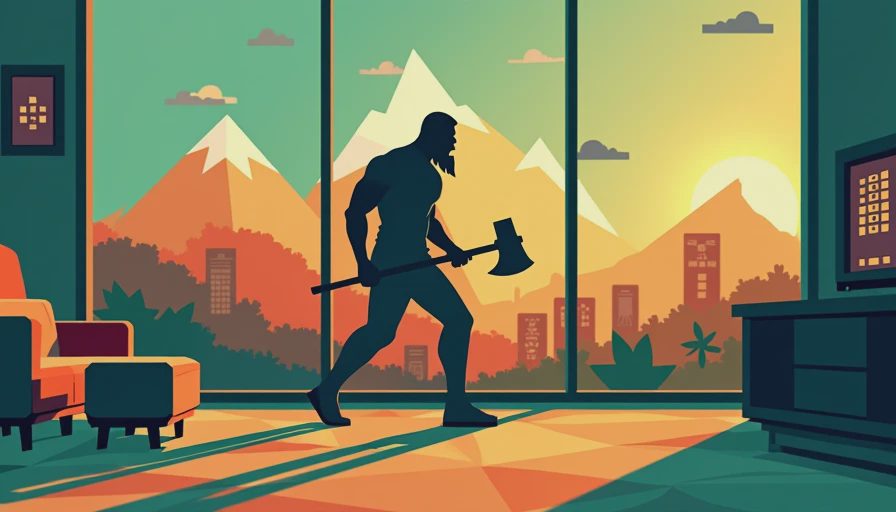
Kratos's Leviathan Axe is one of the best-feeling weapons in modern action games. It has weight, range, and a wonderfully rude recall button. Throwing it into a distant enemy and calling it back into your hand never gets old. The axe can freeze targets, interrupt attacks, hit environmental puzzles, and return with a satisfying thud that makes lesser weapons feel embarrassed.
The Blades of Chaos arrive later and provide a sharp contrast. Where the axe is deliberate, the blades are aggressive and mobile, letting you pull enemies across gaps or control groups from a safer distance. Switching between them is quick enough to become instinctive, especially once the game starts throwing enemies with different elemental weaknesses into the same arena.
Combat is not purely about attacking. Positioning, shield timing, dodging, runic abilities, and Atreus's arrows all matter. On higher difficulties, button-mashing gets punished quickly. Even on normal, the best encounters ask you to read enemy behavior instead of treating every creature as a health bar with legs.
The armor and upgrade systems add customization without turning the game into spreadsheet homework. You can favor strength, runic damage, cooldowns, defense, or luck. Some builds make special attacks more available, while others reward careful defense. I enjoyed experimenting, although the menus can become busy once several upgrade materials and enchantments enter the picture. God of War (2018) gives you enough control to build a preferred style without demanding that you optimize every sock.
A world worth wandering through
The main story is strong, but the optional areas are where the game starts feeling generous. The Lake of Nine acts as a central hub, opening up new paths as the story changes the landscape. You can chase favors, hunt treasures, solve environmental puzzles, or simply paddle toward a suspiciously interesting shoreline.
The side content is not uniformly brilliant. Some favors are straightforward combat errands, and a few collectible hunts feel like chores wearing a fur cloak. Still, the better quests reveal history that the main path only hints at. You learn what happened to forgotten people, meet characters with problems unrelated to Kratos, and see how the realms were damaged by old conflicts.
Exploration also rewards attention. A cracked wall, strange wind current, or locked rune chest can suggest a solution without shouting it through a tutorial window. The game respects players enough to let them stare at a problem for a minute. That minute is often more satisfying than being handed a glowing waypoint.
What does not quite land
God of War (2018) has a few rough edges that become clearer after the initial spectacle fades. The enemy variety is limited compared with the number of combat arenas. You will see familiar creatures repeatedly, sometimes with stronger colors and larger health pools standing in for a genuinely new challenge. Optional bosses can also feel uneven, with some delivering fantastic duels and others relying on irritating area attacks.
The camera usually makes close combat feel immediate, but it can occasionally hide an enemy just outside the frame. The game offers warnings, yet a surprise hit from behind still feels less like tactical punishment and more like the camera forgot to send an invitation. The menu system is another mild nuisance, especially when comparing armor, socketing enchantments, and tracking crafting materials.
There is also a pacing issue in the middle stretch. The story has powerful momentum, then occasionally asks you to repeat a route or complete a task that feels designed to extend the runtime. I did not resent the detours, but I noticed the seams. A little trimming would have made the emotional beats hit even harder.
Is it worth playing on PC?
Yes, especially if you missed it on console or want a strong story game for a modern PC setup. The Steam version includes the complete adventure, and adjustable graphics settings make it possible to tune the experience for different hardware. A capable system can deliver higher resolutions, steadier frame rates, and a cleaner view of the detailed environments.
God of War (2018) is also a good fit for players who usually bounce off open-world games. It has exploration and optional activities, but it does not bury the main story under an endless map. You can follow the critical path, wander for a few hours, or alternate between both without losing the plot.
If you want a pure character-action game with constant combo complexity, this may feel slower than expected. If you want a huge adventure where combat, atmosphere, and character writing support each other, it is an easy recommendation. The game understands that spectacle works better when you care about the people standing beneath it.
The final recommendation
God of War (2018) is a blockbuster with an actual pulse. Its mythology is entertaining, its combat has impact, and its world gives you plenty of reasons to leave the main road. More importantly, Kratos and Atreus feel like characters in progress rather than delivery systems for cutscenes.
I thought I knew what this game was. I did not. Beneath the roaring monsters and thunderous set pieces is a patient story about grief, responsibility, and the frightening work of becoming better than your past. The occasional recycled enemy or awkward menu cannot erase that. God of War (2018) remains a deeply satisfying PC adventure, and one I would happily recommend to anyone craving a single-player game with both muscle and soul.



No notes yet — write the first.