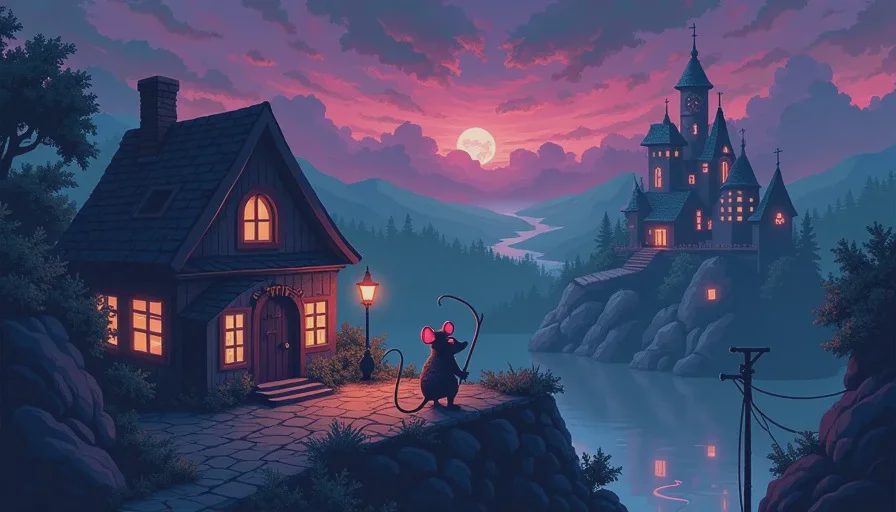
Yacht Club Games spent years on this one. Six years, according to the people who made it. What started as a coding exercise turned into a full adventure across a cursed island, and when Mina the Hollower landed at the end of May 2026 it walked straight into a wall of critical love. Metacritic numbers settled in the low 90s. Multiple outlets handed out perfect scores. It sold hundreds of thousands of copies in the opening stretch and kept climbing. The conversation around it was immediate and loud: this is one of the best games of the year, maybe the best pure adventure in years.
I played it. I finished it. I went back for secrets. The score is not wrong. It is also not the whole story.
What the game actually is
Mina is a mouse, a Hollower, and an inventor. Hollowers study the earth and its properties; Mina is the standout of her generation, the one who refined Spark technology that powers the generators across Tenebrous Isle. When those generators start failing and the island falls under a creeping curse, she returns to fix what she helped build and confront whatever is unmaking it.
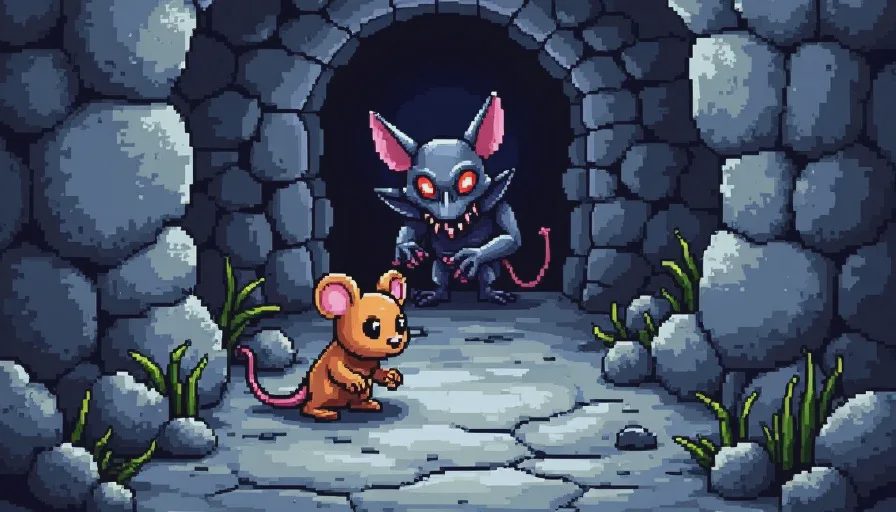
You explore a large, interconnected top-down world rendered in a refined Game Boy Color aesthetic—widescreen, detailed animation, but still proudly limited in palette and resolution. Combat starts with a choice of weapon: the whip Nightstar, dual daggers, or a four-directional hammer. More weapons unlock later. The signature move is Hollowing: a short, invincible burrow that lets you slip under attacks, cross gaps, and reposition. Bones act as currency for permanent upgrades. Trinkets and sidearms let you tune the build. The structure mixes open overworld exploration with denser dungeon spaces, bosses that demand pattern recognition, and a surprising amount of environmental storytelling and optional lore.
The influences are obvious and openly embraced. Classic top-down Zelda (especially the Game Boy era) supplies the bones. Castlevania supplies the gothic mood and the sense that the night is actively hostile. FromSoftware-style aggression and risk-reward show up in how combat and recovery are tuned. Yacht Club’s own history with Shovel Knight shows in the precision of the controls and the density of secrets.
Why the praise makes sense
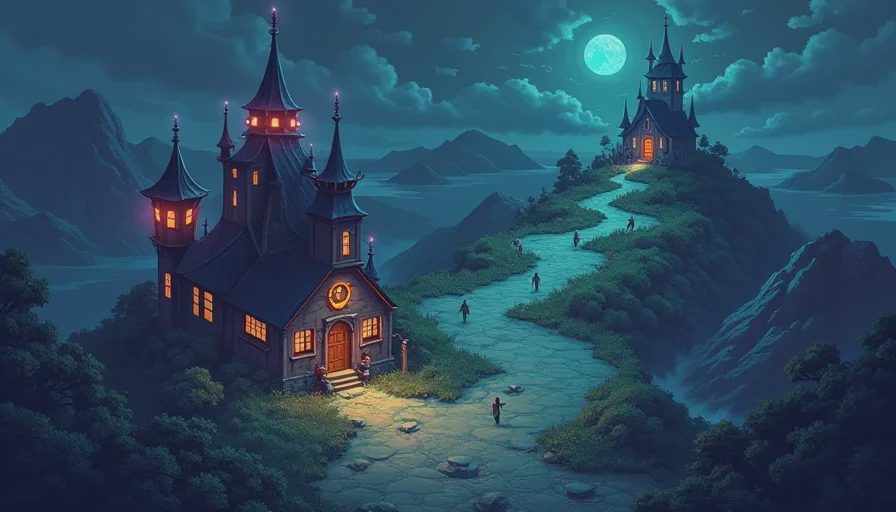
The world is the first thing that lands. Tenebrous Isle feels hand-crafted rather than generated. Regions have distinct identities—cursed farms, haunted houses, crypts, strange industrial Spark sites—yet they connect in ways that reward backtracking once you have new tools. Secrets are plentiful without feeling like checklist padding. The writing has a dry, slightly dark humor that fits the cute-gothic tone. Characters are weird in the best way. The soundtrack (Jake Kaufman leading, with Yuzo Koshiro involvement) is excellent chiptune that knows when to be melancholy and when to push.
Combat is the second pillar. It is tighter and more demanding than classic Zelda. Positioning matters. Burrowing is not a free “get out of jail” button; it has timing and commitment. Different weapons change how you approach groups and bosses. The difficulty can spike, but the game offers enough options and accessibility toggles that the challenge stays negotiable rather than purely punitive. When a boss finally clicks, the satisfaction is real.
The third pillar is simply care. You can feel the years of iteration in the level design, the way new abilities recontextualize old spaces, and the sheer number of small systems that talk to each other. It is a big game that never feels bloated.
Where the score and the experience diverge
A 92 or 93 on Metacritic is an invitation to expect near-perfection. Mina the Hollower is excellent, but it is not frictionless. Combat can feel slightly overtuned in the mid-game if you have not invested in the right upgrades or practiced the burrow timing. Some players will bounce off the initial difficulty curve even with the options available. The story raises interesting questions about technology, responsibility, and the cost of “fixing” a place, yet it does not always dig as deep as the themes suggest. And because the game is so dense, the first playthrough can leave you with the pleasant exhaustion of having missed things rather than the clean satisfaction of having seen everything.
None of that makes the critical consensus wrong. It just means the score reflects a specific kind of excellence: masterful craft within deliberate constraints, a clear authorial voice, and a world that rewards attention. It does not guarantee that every player will fall in love at the same intensity. Some will find the retro presentation charming; others will wish for more modern visual clarity. Some will live for the combat; others will prefer the exploration and NPC conversations.
I landed closer to the former group. The island got under my skin. I kept thinking about unsolved corners and unfinished side paths days after the credits. That is the highest compliment I give any adventure game. At the same time I never felt the pure, uninterrupted flow that the highest scores sometimes imply. There were nights when the difficulty and the density made me put the controller down earlier than I planned.
So is it that good?
Yes. It is that good at being exactly what it set out to be: a meticulously designed, atmospheric, mechanically rich top-down adventure that treats Game Boy Color limitations as a creative strength rather than a nostalgic costume. Yacht Club Games did not just make another retro throwback. They made something that feels like it belongs alongside the games it loves while still carrying their own fingerprints.
The Metacritic number is a useful signal. It is not a substitute for playing the thing yourself. If the combination of dense exploration, demanding-but-fair combat, and gothic-cute world-building sounds like your kind of evening, Mina the Hollower will almost certainly earn several of them. If you need faster pacing or more modern presentation, the score may overpromise.
I bought it, finished it, and still think about the island. That is the only metric that ultimately matters to me. On that measure, the hype was justified.
— Alex





No notes yet — write the first.