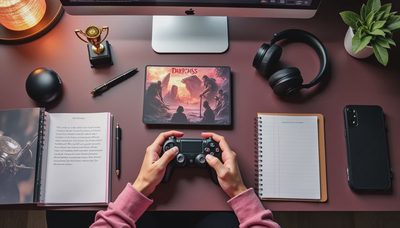
There is a particular kind of late-night gaming session where you tell yourself you will do one quick mission, then look up and realize the sun is thinking about coming out. Monster Hunter: World is extremely good at creating that problem. It is a huge action RPG about tracking monsters, learning their habits, building better equipment, and getting flattened by something with too many teeth. I thought I knew what this game was. I did not.
The first few hours can feel clumsy, especially if you arrive expecting a traditional button-mashing action game. Your hunter moves with weight. Weapons have strange rhythms. Menus contain enough icons to make a person question their life choices. But once the pieces settle, Monster Hunter: World becomes one of the most rewarding games on Steam: a patient, physical, occasionally ridiculous adventure that respects your ability to improve.
The real hook is the hunt, not the checklist
Most games treat a monster as a health bar wearing a memorable costume. Monster Hunter: World treats it like an animal occupying a space. You follow footprints, examine broken branches, listen for distant roars, and notice how one creature reacts when another wanders into its territory. The process is not always fast, but it creates anticipation that a mission marker cannot provide.
When the fight finally begins, every detail matters. A Great Jagras can turn a confident opening into a muddy panic. A Rathalos can spend half the battle airborne, daring you to waste your patience. Later hunts ask you to understand positioning, elemental weaknesses, stamina management, and the warning signs before a devastating attack. Winning feels less like checking off a quest and more like finally solving a dangerous machine.
That sense of earned knowledge is the secret sauce. Your hunter does not suddenly become brilliant because a cutscene says so. You become better because you learned when to roll, when to sharpen, when to heal, and when running away is the smartest possible move.

The weapons are practically different games
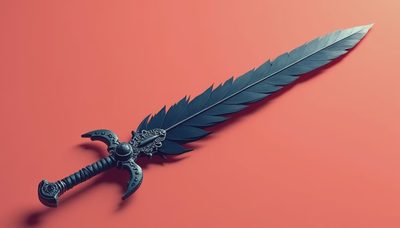
The weapon selection in Monster Hunter: World is not a collection of minor variations. It is fourteen entirely different arguments about how combat should work. The Great Sword asks you to commit to enormous hits. Dual Blades turn you into a spinning blender with stamina problems. The Hunting Horn lets you support a team while bonking monsters with music. The Insect Glaive gives you aerial mobility and a tiny insect companion that gathers combat buffs.
I started with the Long Sword because it looked stylish, then spent several hunts missing counter timings and getting launched into the scenery. That failure was useful. Switching to the Sword and Shield made the game feel more readable, while experimenting with the Charge Blade introduced an entirely new layer of timing and resource management. The game becomes much more interesting when you stop asking which weapon is strongest and start asking which one makes you want to hunt again.
You can change weapons between missions, but there is still a satisfying feeling of developing a personal style. One player dances around a monster with Dual Blades. Another plants a Gunlance shell directly into its face. Both can be right. That flexibility gives Monster Hunter: World remarkable replay value without requiring a new character or a new campaign.
Progression feels tangible because gear comes from the world
The upgrade loop is simple on paper: hunt monsters, collect materials, craft armor and weapons, then hunt stronger monsters. In practice, every piece of equipment carries a memory. That helmet exists because you spent twenty minutes chasing a creature through a coral forest. Those boots exist because a flying wyvern ruined your evening three times and eventually paid for it.
Armor sets also change how you approach preparation. You might favor extra health while learning a new encounter, then switch to skills that improve critical hits, stamina, defense, or elemental resistance. The best builds are not just numbers on a spreadsheet. They reflect the problems you are trying to solve.
There is some friction here. Early menus are not especially welcoming, and the game does not always explain why a skill matters. Still, Monster Hunter: World makes equipment feel meaningful in a way many loot-heavy games fail to achieve. A new sword is not merely a bigger number. It is permission to try a different plan.
The world has more personality than expected
The Ancient Forest, Wildspire Waste, Coral Highlands, and other locations are built for combat, but they rarely feel like empty arenas. Small creatures scatter through the undergrowth. Monsters collide without asking permission. Environmental hazards can turn a straightforward hunt into a glorious mess. Vines, slopes, ledges, traps, and destructible scenery give the landscape a role in the fight.
The handler and research teams can occasionally be a little too enthusiastic, especially when you would prefer to get back to hitting things. Yet the wider expedition has genuine charm. The base camp feels lived in. Researchers have routines. Your Palico is an excellent little partner who brings more emotional support than several human characters in larger RPGs.
Monster Hunter: World is not a character drama, and it does not need to be. Its storytelling is mostly about discovery, ecology, and the feeling of entering a place larger than your immediate objective. Sometimes a monster roar rolls across the map and the whole game suddenly feels enormous.

Solo, co-op, and the wonderfully messy middle
Monster Hunter: World works alone, but co-op is where its personality becomes impossible to ignore. Playing with friends turns preparation into a group ritual. Someone brings a trap. Someone forgets to eat before the hunt. Someone arrives with a weapon they have barely practiced and immediately mounts the monster. The mission may be efficient, or it may become a slapstick disaster. Both outcomes are good.
The multiplayer structure has a few awkward edges, particularly around story missions and cutscenes. You often need to discover a monster’s introduction before friends can join, which is a strange bit of friction in an otherwise excellent co-op game. Once everyone is in the hunt, though, the teamwork feels natural. Players can heal, stagger, mount, trap, distract, and rescue one another without turning combat into a simple support rotation.
If your regular group is unavailable, the SOS system can bring other hunters into a mission. That creates a fun mix of strangers who communicate mostly through gestures, item use, and the shared language of a monster suddenly charging through a wall.
Is Monster Hunter: World worth starting now?
Absolutely, especially if you enjoy games that become better through practice rather than constant rewards. Monster Hunter: World is not a cozy weekend snack. It asks you to read tutorials, learn systems, accept a few embarrassing defeats, and resist the urge to blame the camera every time a tail removes half your health. The camera is sometimes guilty, though.
Give the game time to reveal its rhythm. Try several weapons before deciding combat is not for you. Eat before hunts. Upgrade your armor. Use the training area. Bring antidotes when the monster is obviously going to poison you. These are small habits, but they transform the experience.
The Iceborne expansion adds an enormous second chapter for players who fall in love with the foundation, but the base game already offers a substantial adventure. Monster Hunter: World still feels like a rare blockbuster with texture: strange, demanding, funny, beautiful, and built around the joy of getting better at one thing.
I came for the monsters and stayed for the ritual. The tracks, the preparation, the nervous first swing, the victory pose, and the ridiculous meal afterward all become part of the memory. Monster Hunter: World is a little intimidating, occasionally awkward, and completely worth meeting halfway. This one earned my evening.


No notes yet — write the first.