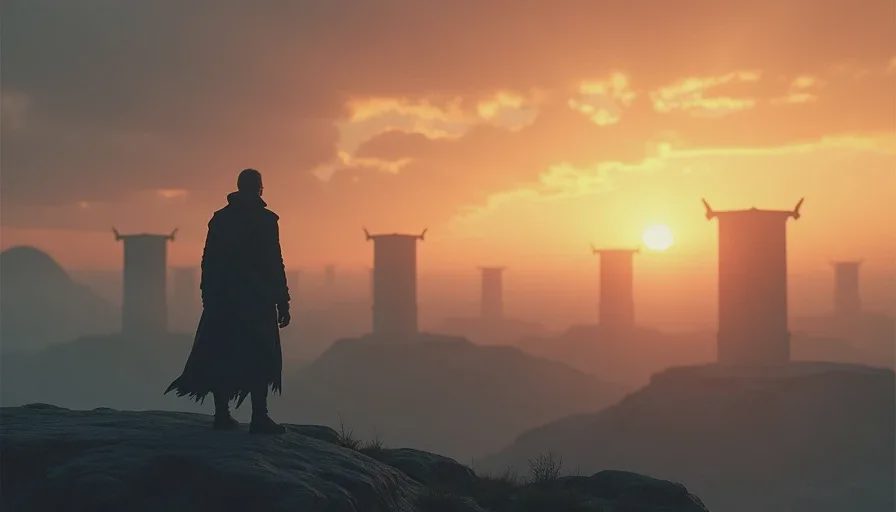
I liked Avowed. That is the part that makes this annoying to write.
The opening hours had weight. The world felt considered. The writing had texture. Combat was serviceable and the first region gave me the quiet pleasure of learning a place instead of being marched through a tutorial. I played it the way I try to play most things now—deliberately, without rushing the main path, taking side content when it felt like it belonged. For a while it worked.
Then, somewhere past the twenty-hour mark, the game stopped feeling like it was respecting the time it was asking for.
The shift that is hard to name
It is rarely one catastrophic decision. It is a slow accumulation. The same enemy types return with slightly higher numbers. The side quests begin to follow the same emotional and structural template. The map fills with icons that promise meaning and mostly deliver another short loop of travel, conversation, skirmish, and reward. The story still has interesting ideas, but the delivery starts to feel like it is padding the distance between the beats that matter.
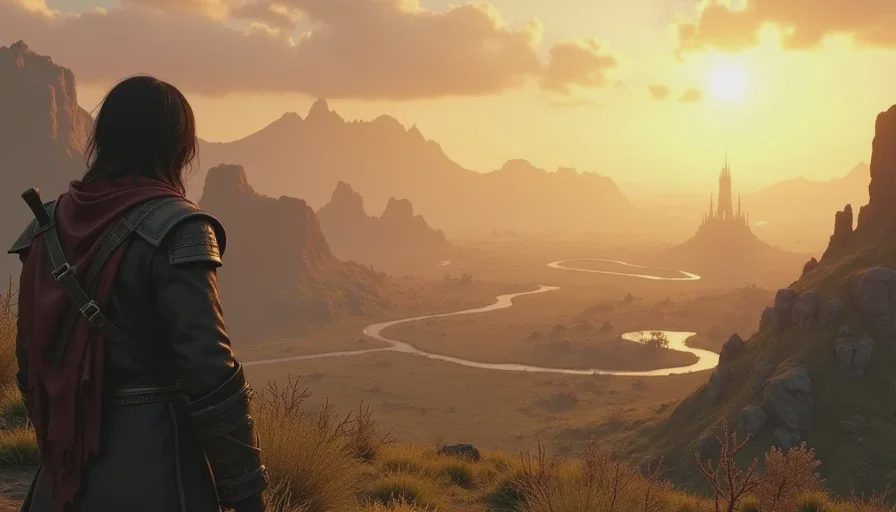
I am not allergic to length. Some of my favorite games are long. The difference is whether the extra hours feel like deepening or like inventory management dressed up as content. Avowed, for me, crossed that line. The first region felt authored. Later regions started to feel produced. I could predict the shape of the next objective before I accepted it. That prediction killed the curiosity that had kept me logging in.
When “more” becomes the problem
Modern design loves density. More side content, more collectibles, more systems, more reasons to stay. On paper it is generosity. In practice it can become a quiet form of disrespect. The game assumes your continued presence is the default. It does not always ask whether it has earned another session.
I started noticing the cost. An evening that used to leave me thinking about a character or a piece of world-building began leaving me thinking about how many markers were left. The pleasure of exploration turned into the mild obligation of clearance. That is the moment I protect against. Once a game makes me feel like I am working through a list instead of inhabiting a place, my attention starts looking for the exit.
Avowed is not uniquely guilty. Plenty of big games do versions of the same thing. The ones that keep me are the ones that know when to stop adding and start refining, or that trust a smaller number of stronger moments. The ones that lose me are the ones that treat my time as an infinite resource they are entitled to fill.
The decision to walk away
Quitting a game that is still “good” feels strangely personal. There is a low-level guilt, as if abandoning something competent is a failure of patience. I do not buy that framing anymore. Time is the only currency that actually runs out. A game can be well-made, critically respectable, and full of systems I intellectually respect, and still not deserve another ten or fifteen hours of my life.
I stopped at a natural break point, uninstalled it, and felt lighter. That lightness is information. It told me the relationship had already shifted from curiosity to mild endurance. Continuing would have been stubbornness, not appreciation.
I still think about the early hours with some fondness. The writing had moments. The world had atmosphere. The problem was never that Avowed was bad. The problem was that it stopped behaving like it understood the value of the hours it was consuming.
What I take from it
I am stricter now about the midpoint check. Around the fifteen-to-twenty-hour mark I ask a simple question: am I still playing because I want to know what happens next, or because I feel I should finish what I started? If the answer tips toward obligation, I give myself permission to leave.
That permission is not cynicism. It is the same standard I try to hold for everything else on this site. A game has to keep earning the evening. The moment it starts assuming the evening is already owed, I start looking for the door.
Avowed got twenty honest hours from me. That is more than a lot of games get. It did not get the rest. I do not regret the time I spent. I also do not regret stopping.
Some good games are still not worth the full run. Learning to tell the difference is part of protecting the nights that actually matter.
— Alex





No notes yet — write the first.